From the back cover
Octopirate sets off on an unforgettable adventure to save his home, the coral reef, with his loyal ocean friends.
When a terrible storm threatens everything he loves, he must find the courage and strength to rebuild.
Can he make it back in time and convince the humans to save his only home?
About the author.
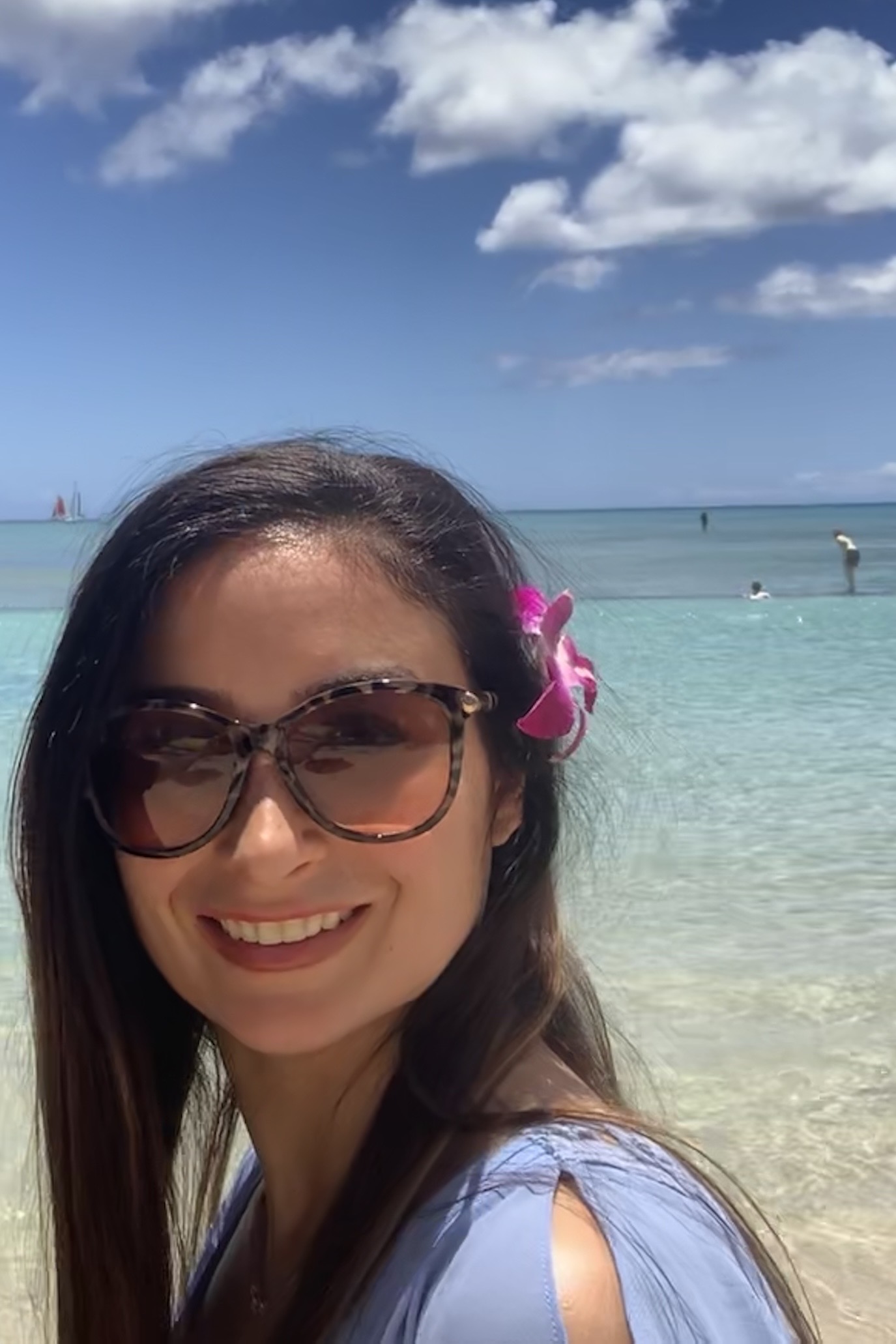
Leila Rose Golchehreh is an entrepreneur, lawyer, and founder of a technology company. A graduate of UC Berkeley and the Sorbonne in Paris, she has studied sustainable economic development and international law. Being so deep in tech, privacy, and law, and living "in the cloud," she'd been feeling a little disconnected from the planet and from her passion for sustainable development and environmental conservation. Leila wrote Octopirate to reconnect with her passion for environmental protection, and it is the first book in a planned series.
Why I wrote it.
I have always loved the ocean. There is so much of it still a mystery, so much going on just beneath the surface that we never see. That sense of awe is what keeps me going back.
I've also always been fascinated by the octopus. They're such beautiful, intelligent creatures, and I'm hopeful you'll come to love them as much as I do.
The ocean is calming. Healing, even. Humans like me need the ocean just as much as Octopirate does. We're more like him than we sometimes remember.
That love began behind glass, at the California Academy of Sciences in San Francisco's Golden Gate Park. As a child I would stand in front of the aquarium tanks and just stare, watching a world that seemed too colorful and too alive to be real. That is where I fell in love with nature. It only occurred to me recently that this book is bookended by aquariums: one made me fall in love with the ocean as a little girl, and another, years later and a continent away, reminded me what that love asks of us.
Over the years I've been lucky enough to snorkel around the Caribbean in Belize, Costa Rica, and Mexico, swim in the Mediterranean Sea, and visit beaches across Brazil, Thailand, and Florida, among other places. Each reef is its own world: vivid, busy, generous, full of creatures going about their business. And each time I come up at the surface, I feel like I've borrowed something I have no right to keep.
The trip that started Octopirate was a snorkel trip off the coast of Florida. I went out wearing reef-safe sunscreen, careful not to touch anything, doing my small part. But what I saw underneath the water was not what I had seen years before. The colors were faded. Whole sections of coral were ghost-white or gray. The fish were still there, but it felt quieter, like a city after the lights had gone out.
A few days later, I visited the Phillip and Patricia Frost Museum of Science in Miami. They have these enormous reef tanks built to show what a healthy living coral reef actually looks like. The contrast was striking. The colors were saturated. The fish moved with purpose. The coral pulsed with a kind of slow, alien beauty that humans can't really invent. I stood in front of one of those tanks for a long time, and I was suddenly that little girl at the Academy of Sciences again, nose to the glass.
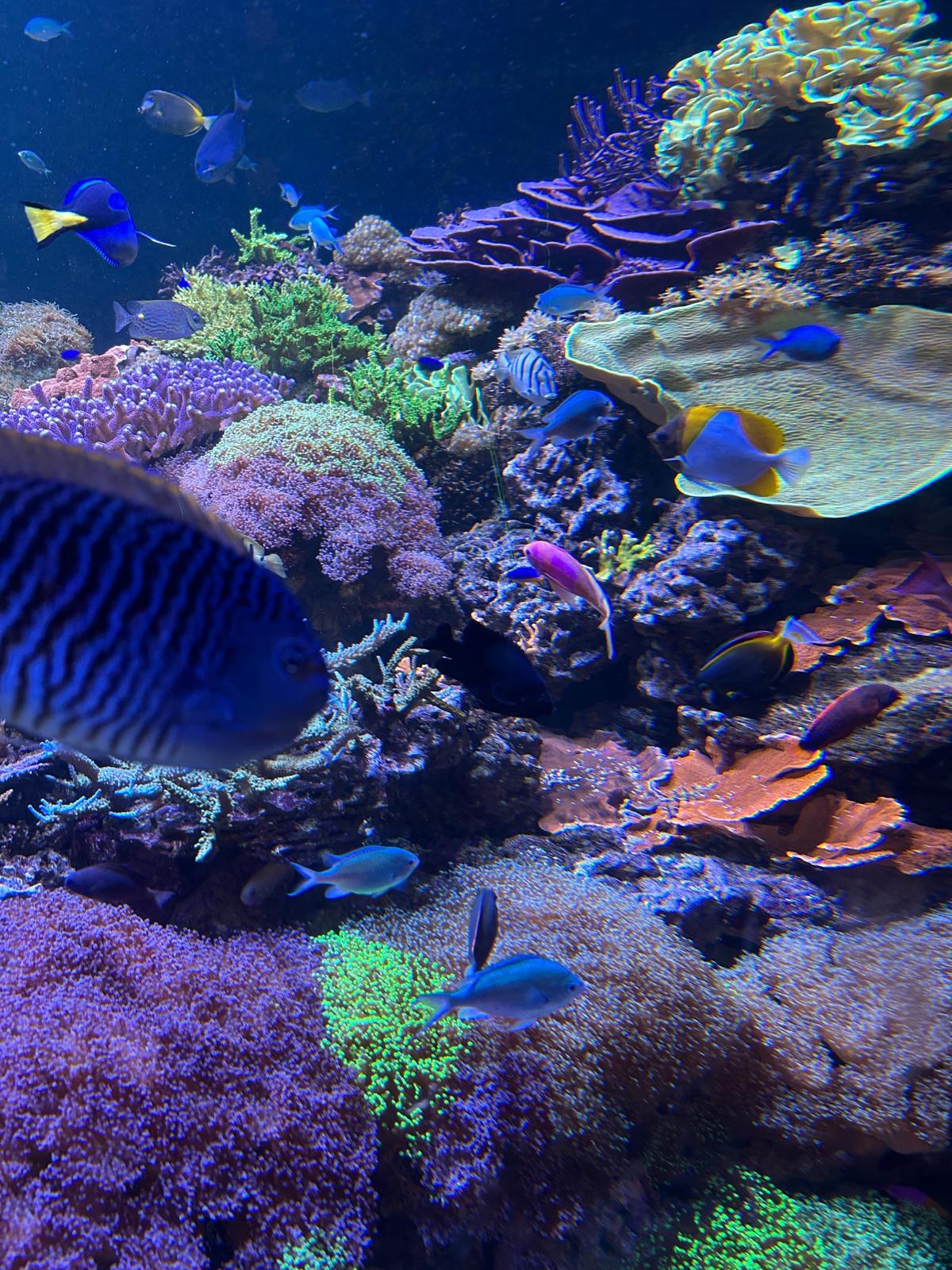
The juxtaposition of those two experiences (the dimmed reef in the wild, the vibrant reef on display behind glass) wouldn't leave me alone. The reefs in the ocean used to look like that. They can look like that again. But not without help. Not without people willing to make different, sometimes difficult choices.
Why a children's book?
Because kids are the most powerful conservationists we have. A six-year-old who falls in love with an octopus will grow up to make different decisions than a six-year-old who never met one. The way we save things we love is by introducing them to people who haven't fallen in love with them yet.
Octopirate is, on the surface, a tiny adventure story. There's a hero, a problem, a crew of incredible ocean friends, and a happy ending. Under the surface, like under any good reef, there's something more.
I wrote this book because I want every child who reads it to know three things: the ocean is real, real ocean creatures need real human help, and small creatures, including small humans, can do enormous things when they choose.
My hope is that this book finds kids all over the world, because it will only be through collective action that we can save Octopirate's home. And ours.
Together.
About the illustrator.
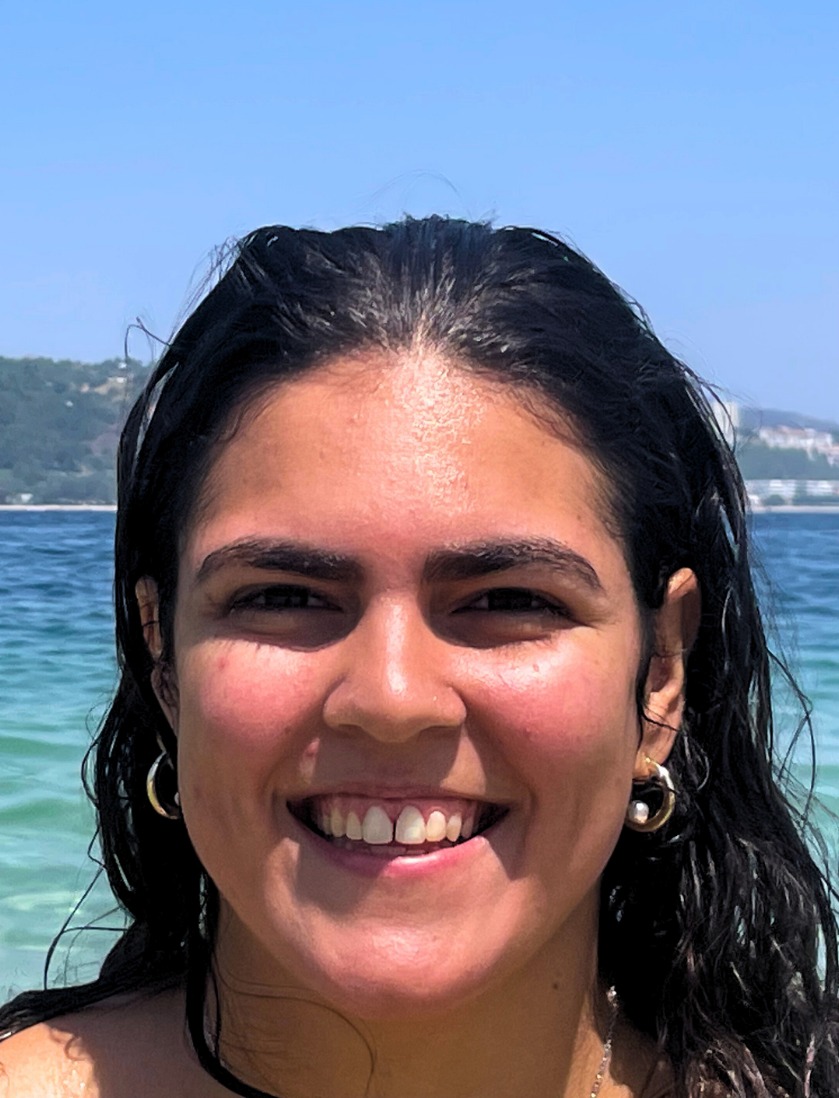
Nayana Viana Ferreira is an illustrator and writer who has published books on a variety of topics for children and adults. Originally from Brazil and based in Lisbon, Portugal, she supports a healthy and clean planet for her children and future generations.
Special thanks.
Thank you to Leonardo, Rana, and Dan, whose careful eyes and thoughtful edits shaped this book at every step, and to Ben, for the motivation to write a children's book on a topic where I care deeply, a first for me.