Real animal facts
Dolphins
have culture.
The Bubble Brigade's real-life cousins call each other by name, sleep with half their brain at a time, and pass tricks down generation to generation. Genius level: aquatic.
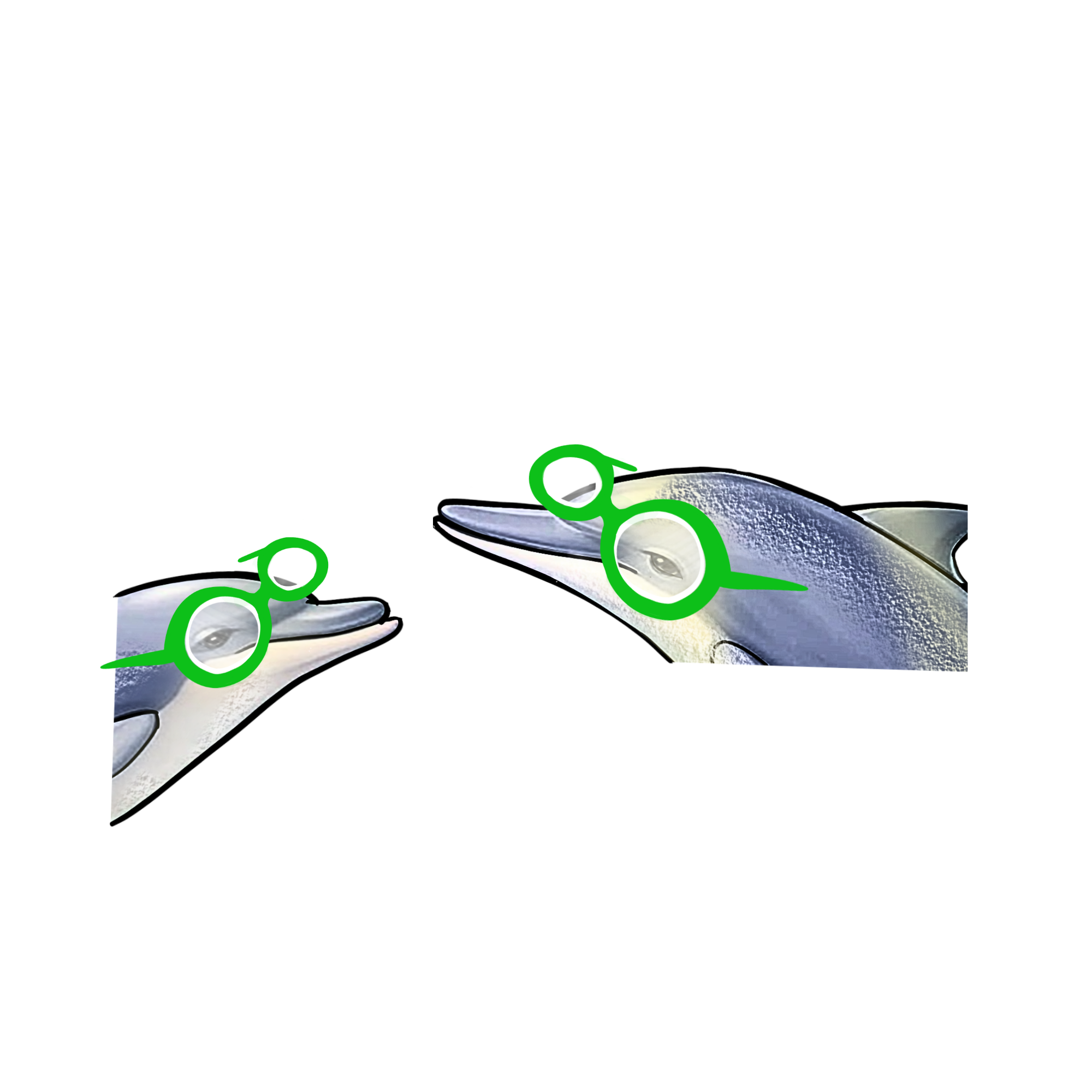
The Bubble Brigade's real-life cousins call each other by name, sleep with half their brain at a time, and pass tricks down generation to generation. Genius level: aquatic.
They're not "smart for fish." They're smart, period.
Each dolphin develops a unique "signature whistle" early in life that other dolphins use specifically to refer to them, like a name. Scientists have recorded dolphins calling out their friends by name across miles of open water.
Dolphins sleep with one half of their brain at a time. The other half stays alert to keep surfacing for air and to watch for predators. They never fully shut down. Imagine never having a really good Sunday afternoon nap.
Pods of dolphins in different regions develop distinct clicks, whistles, and call patterns, basically their own dialects. Two dolphins from different oceans need a minute to "translate" each other.
Some bottlenose dolphins in Shark Bay, Australia stuff a sea sponge over their nose to protect it while they forage along rocky bottoms. Mothers teach this trick to daughters, who teach their daughters. That's culture.
Dolphins emit rapid clicks and listen for the echo bouncing back, building a mental "sound picture" of fish, rocks, even buried objects in the sand. They can detect a fish hiding behind a wall of sand from yards away.
Dolphins recognize themselves in mirrors, a test most animals fail. Only great apes, elephants, magpies, and a few others share this. Inside their head, there's a clear sense of "this is me."
Bottlenose dolphins can sprint at speeds estimated up to about 25 mph and leap several feet out of the water. They surf wakes, ride bow waves of boats, and seem to do it for genuine fun.
Some pods herd fish into tight "bait balls" and then take turns swimming through to feed. Others work with human fishermen in Brazil. The dolphins drive fish toward shore and signal to the fishers when to cast their nets.
Dolphin pods are extended families. Babies stay with mom for 3–6 years. Mothers and daughters often stay close their whole lives. They mourn lost pod members and sometimes carry deceased calves with them for days.
Almost all mammals are born head-first. Dolphins are born tail-first so they don't drown during birth. They need to reach the surface for that first breath quickly. The whole pod often gathers around to help mom.
Big brains. Big problems.
Hundreds of thousands of dolphins die each year tangled in commercial fishing nets and gear, especially in tuna fisheries that don't use dolphin-safe methods.
Ship engines, sonar, and offshore construction drown out the clicks and whistles dolphins rely on to navigate, find food, and communicate.
Wild dolphin pods travel 40+ miles a day. In a pool, they can swim that in laps in a few hours. And because dolphins are deeply social beings who live their whole lives in close-knit pods, a tank is not just small. It is lonely. Captive dolphins live much shorter, more stressful lives.
Easy wins, real impact.
Check the Earth Island Institute dolphin-safe brand list when you shop. Greenpeace's tuna rankings dig deeper into how brands actually fish.
If dolphins perform tricks for crowds, they probably shouldn't be there. Dolphin Project tracks which facilities are ethical sanctuaries vs. for-profit entertainment.
Going on a wild-dolphin watch? Pick a Whale Heritage Site-accredited operator, and read NOAA's Marine Life Viewing Guidelines first. No chasing, no feeding, no swim-with-pods.
Adopt a named, tracked dolphin through Whale and Dolphin Conservation (US). You get updates on "your" dolphin and donations fund real research and protection work.
Octopirate's coolest, smartest, sunglasses-wearing crew. (And yes, in real life dolphins are pretty much exactly like this.)
🐢 Next: Meet the sea turtles → 🐙 Pre-order Octopirate Save the Reef →